



Bats Around Goathland, North Yorkshire
The UK has recorded 18 bat species, 17 of which are known to breed. Here in the North York Moors National Park (NYMNP), they have identified at least ten of these species. Pipistrelles are the most commonly encountered, but the much rarer Alcathoe bat has also been recorded in the area.
In Goathland, the Soprano and Common Pipistrelle bats are the most likely species to be encountered and can be seen in and around many of our buildings. Currently however we don’t have a very good knowledge of how many and which species there are.
All bat species in Britain are insectivorous meaning they feed primarily on insects and other small invertebrates. They require an abundance of insect prey as they have voracious appetites, with Pipistrelles reportedly catching over 3,000 insects each night. Bats use echolocation to search for and catch food. They send out bursts of high-pitched sound and listen for the echoes that bounce off insects, trees, and even the night air itself. They take advantage of the darkness and so are affected by too much light. Fortunately, in Goathland, we have great dark skies

Pipistrelle bat
Year in the Life of a Bat
Bats spend most of the winter hibernating, a state of inactivity characterised by lower body temperature, slower breathing, and lower metabolic rate.
In early spring they may leave the roost on warmer nights to find food and a drink of water, but generally they don’t come out of hibernation until April. Females then start forming maternity colonies whilst the males roost on their own or in small groups.
In early summer the females usually give birth to a single pup, which they feed on their milk. At around six weeks old, the young bats begin to catch insects for themselves and no longer need their mothers’ milk. The summer maternity colonies begin to disperse and bats may move on to mating roosts.
Mating season begins in early autumn and at the same time bats concentrate on building up fat stores for the coming winter hibernation period. And finally, as insects become harder to find they settle down for the winter hibernation once again.
Where and when to spot bats
May to September, within the first 30 minutes after sunset, is optimal.
Best location: Bats are nocturnal and spend the day at roost sites which are primarily in buildings or old trees. The traditional buildings found in Goathland village are probably important roost sites for many species, particularly where they are found near areas of woodland and close to rivers and streams. A number of our river bridges, particularly where there are numerous small gaps and cracks between the stonework, may be important roost sites for a number of species too.
Introducing Goathland’s Bat Project
We really don’t know how many and which type of bats live in and around Goathland. Working with the ReConnect Project of the NYMNP we have been given the opportunity to study our local bat population.
The River Esk Connect (REConnect) project is a five‑year programme launched in late 2024 in the North York Moors National Park, funded by The National Lottery Community Fund. It aims to reconnect people with the Esk to encourage a deeper appreciation of the area’s natural beauty whilst building awareness of how climate change is affecting the valley. Through this work, the project hopes to spark community‑led efforts that create lasting environmental benefits and strengthen the relationship between local people and the place they call home.
In April 2026, Toby Panter, Conservation Field Officer at NYMNP, gave a talk about bats and introduced the Goathland Bats project.
Working with Toby, we have placed a bat‑recording device in the village for the year. This device is moved regularly to different locations enabling us to capture all bat activity during that period. The British Trust for Ornithology will then analyse the recordings to identify the species present.
Our aim through this project is then to produce a report of our findings.
Please be aware: All bats are protected under UK law, making it illegal to intentionally harm them or disturb their roosts.
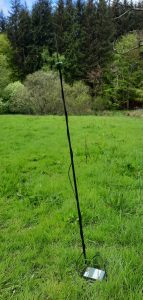
Goathland Nature Group - Bat detector
Bat Resources
Bat Conservation Trust: For further information on bats visit the Bat Conservation Trust The Bat Conservation Trust are the UK’s leading non‑governmental organisation dedicated exclusively to the conservation of bats and the habitats they depend on.
North Yorkshire Bat Group: For focussed information on Bats covering North Yorkshire, visit the North Yorkshire Bat Group The North Yorkshire Bat Group is a volunteer‑run organisation and the only group in the county dedicated to conserving bats and promoting public understanding of these remarkable animals.