




Monitoring Goathland Rivers
The quality of our waterways is vitally important for the sustainability of local nature as well as our own health. Working in partnership with North Yorkshire National Park and Yorkshire Water we are trying to ensure that wildlife is protected and that we are able to detect any early signs of water pollution.
There are two aspects to this project; testing for pollutants, and Riverfly monitoring.
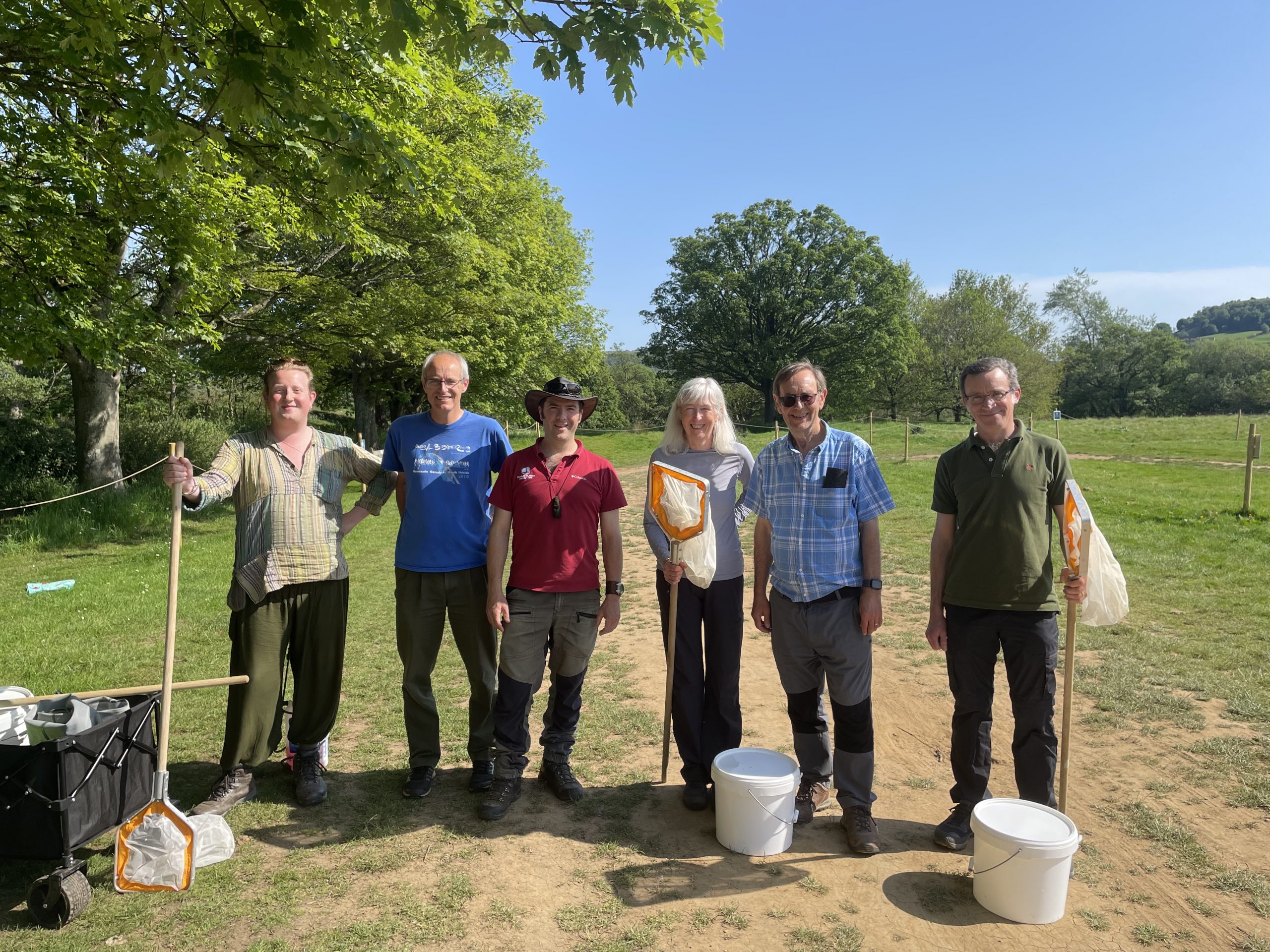
Goathland Nature Group - River monitoring team
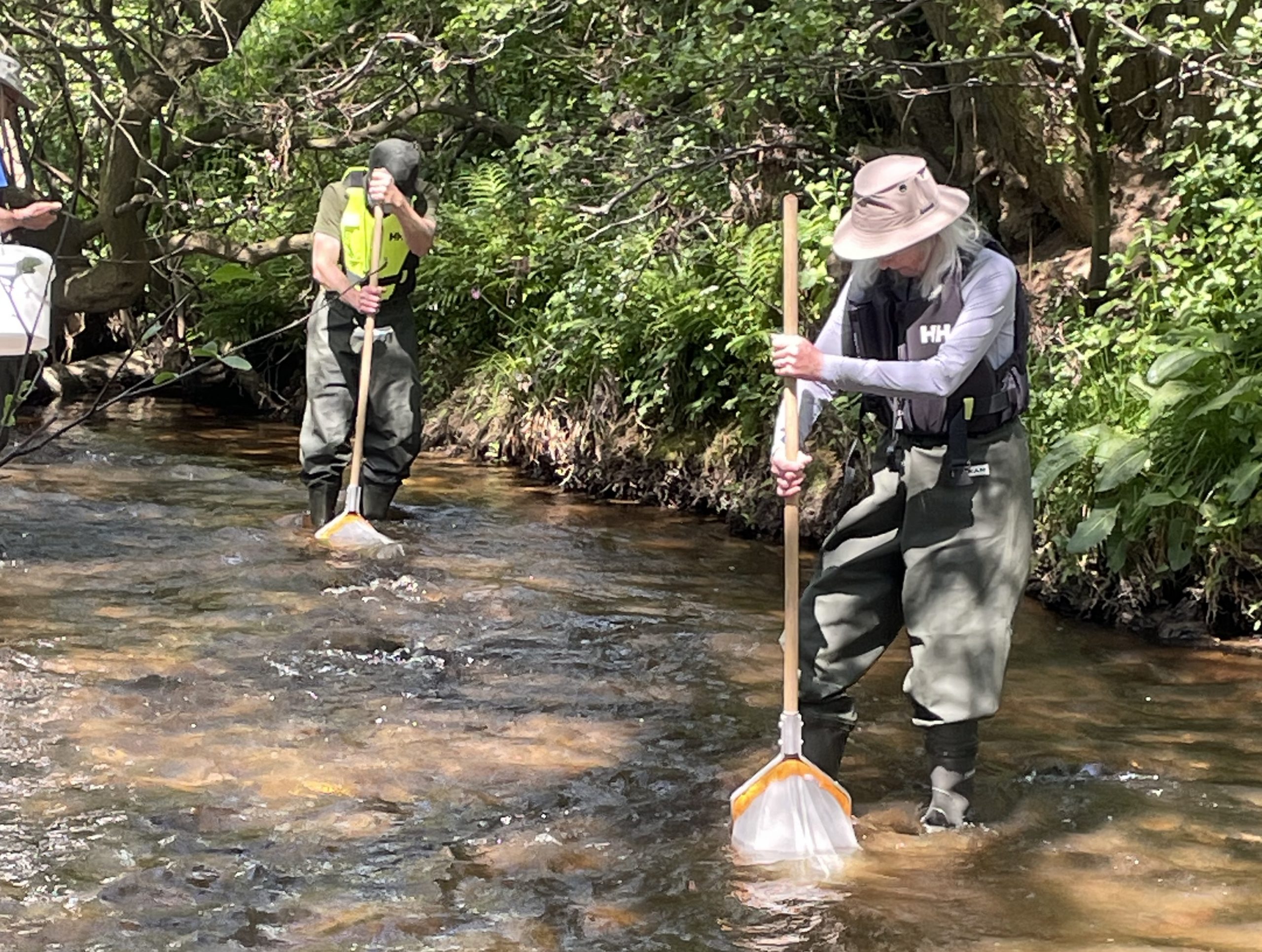
Goathland Nature Group - River monitoring team training session
Monitoring Water Pollution
As we are in a rural area the main concerns for pollutants are harmful runoff from agricultural land and sewage spills. Regular testing of our waterways and reporting back water quality data to Yorkshire Water can help us maintain quality and alert them to any problems detected.
Riverfly Monitoring
Riverfly are a valuable indicator of the health of our rivers. They are also a central part of the freshwater ecosystem and provide an important food source for fish and birds. Riverfly is a generic term that includes Mayflies, Stoneflies and Caddisflies.
The Becks and waterways in the Goathland area are shaped by the upland rainfall that flows off the moors into fast running watercourses broken up by waterfalls. For the most part, any suspended rock particles are carried along in the rapid current that leave the stream bed bare of sediment. This prevents many water plants from growing and only insect-life that can tolerate fast-flowing water populates these streams. The flattened nymphs of mayflies and stoneflies are able to cling to stones. The caddisfly larvae, that are carnivorous, attach themselves to the river bottom in silken nets that act to trap small invertebrates.
In healthy rivers riverfly larvae would be present all year round. Because they are sensitive to changes in water quality a drop in their numbers is an indication that something is wrong.
Monitoring our riverfly population is another way in which we can identify problems early and seek solutions. The monitoring is undertaken by regularly collecting kick and hand samples, identifying and recording them, before returning the sample to the waterway.