



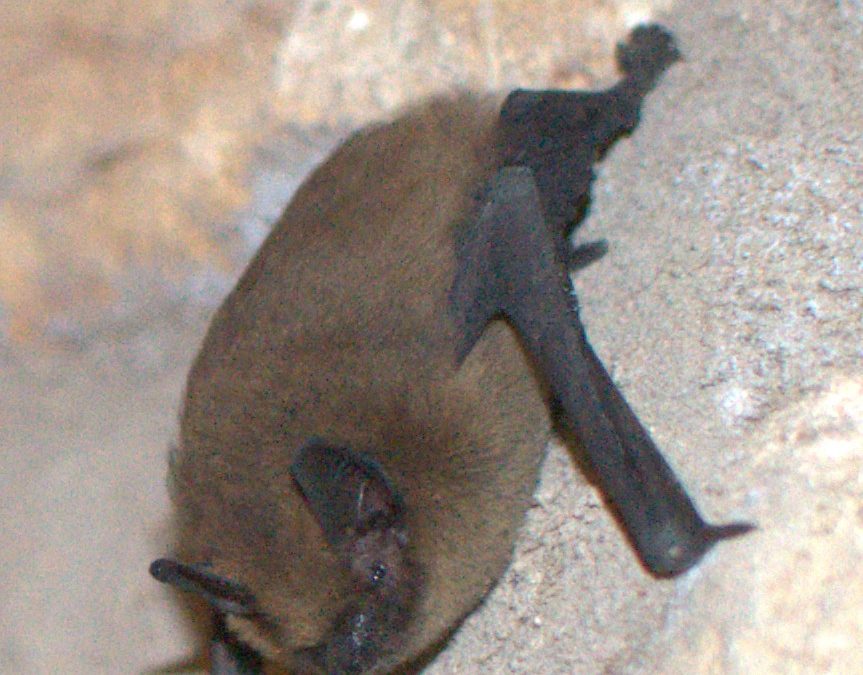
We are now about half way through the 2026 bat survey across Goathland Parish. You will recall that we have been loaned two bat sound recorders from the North York Moors National Park. We have so far undertaken 16 surveys in different properties around the Parish.
These are the results currently available to us, whilst final results will hopefully be available in November.
Bat project equipment routine
The bat meter is put out for an average of five nights at each residence and during that time it records all sounds of bats, but also bird call, animal sounds and even some moths! The sound files are uploaded to the British Trust for Ornithology who categorise each sound and send us back results a few days later. The results show how many bat sounds were heard, from which species, and which type of call was made.
Bat results to date
Currently we have documented a whopping 65,139 individual bat sounds. This doesn’t mean we have that number of bats in the parish, as an individual bat will be recorded many times flying around the same site.
Not surprisingly the commonest bat species recorded was the Common Pipistrelle. So far 94% of bats heard are from that species. We have however also documented sounds from nine other species – as in the chart below.
You should know that only 11 species of bat have been recorded in North Yorkshire and 10 of them appear to be in and around in Goathland!
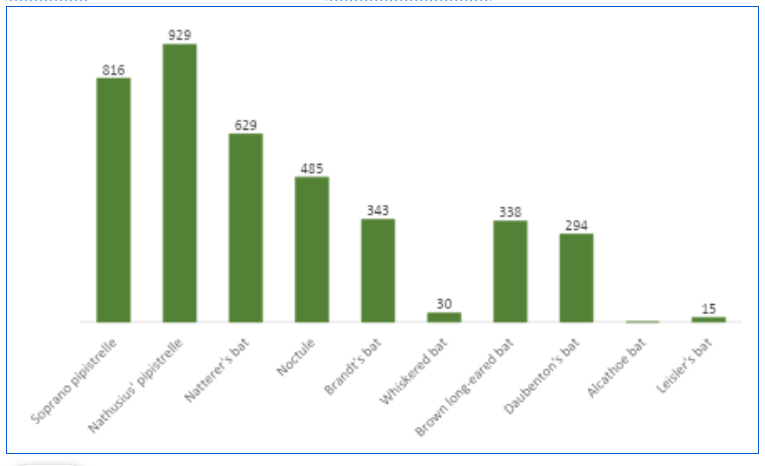
Goathland bat survey results mid-2026
Bat sounds
Obviously, these high frequency sounds are not audible to the human ear, but the software used allows us to differentiate and enlighten us on some of the bat activity.
80% of sounds seem to be made for echolocation, so allowing the bats to navigate around the gardens. 18% are social calls between bats, whilst the final 2% suggest the bats are actually using feeding buzz sounds.
Weather and bat activity
We have noticed that weather plays an enormous part in determining the amount of bat activity. If it is too cold or if it is raining there are few bats around. Some of the properties had apparently low bat numbers but we do hope to revisit these later in the summer and it will be interesting to see any difference with different weather conditions.
Environment and bat activity
The final pattern we have noticed is that the environment of the property visited alters the mix of bats seen. Those with water near by seem to have a higher number of Daubenton bats recorded and only the more rural properties seem to get Leisler’s and Noctule bats.
It certainly will be interesting to do some number crunching at the end of the project to see if any other patterns emerge.
Bat thanks
A big thank you goes to all the Goathland villagers who have allowed us to use their gardens for the bat surveys so far, and a special thanks to Ken and Gary who have coordinated and run this project.
Final provisional results will be presented at our October 2026 Goathland Nature Group meeting.
For details on all our events inlcluding, talks, films and other events we’re present at visit our Events page.