




Elaine is the local Ambassador for the BTO Garden Birdwatch, Natural History Curator for Whitby Museum and a member of Whitby Naturalists.
In this new regular series, Garden Birdwatch, Elaine shares her insights on garden birds (plus occasional visitors) through the seasons.
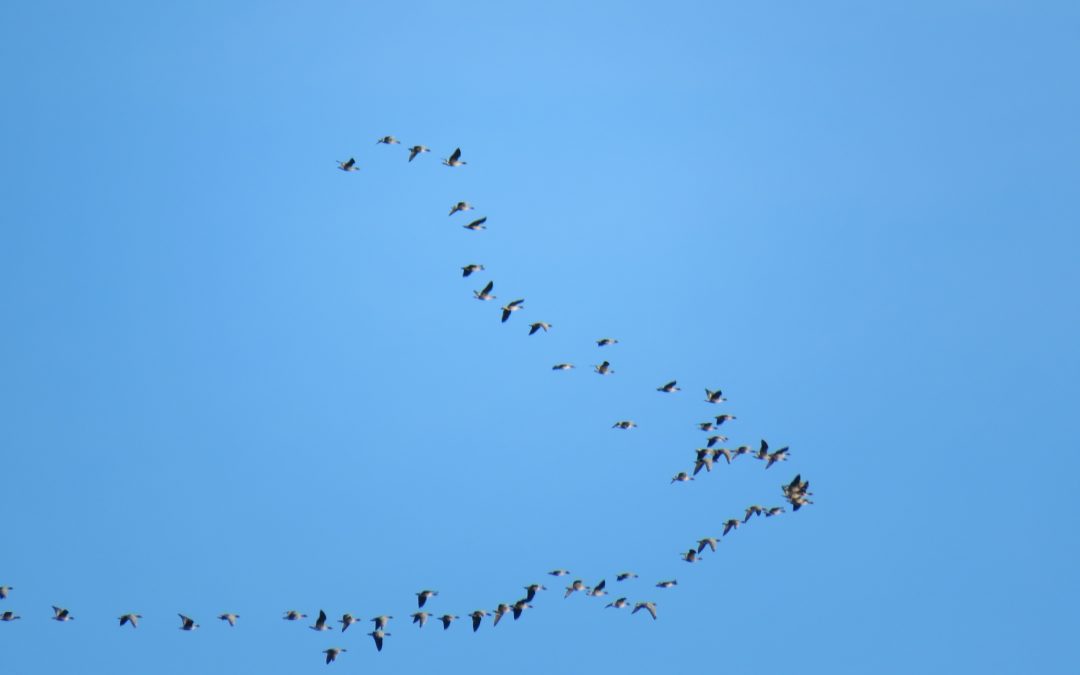
It seems that, despite some lovely, warm days, autumn is now well on its way. The appearance of Fungi and the turning colour of leaves certainly suggest it but, for me, the most telling sign of the change of season is the skeins of Pink-footed Geese heading south for the winter, accompanied by that glorious ‘wink wink’ call.
Pink-footed Geese breed on arctic tundra and mountainsides in Greenland, Iceland and Svalbard, taking full advantage of the constant daylight. Being ground-nesting birds, the chance of predation is reduced in the high arctic, although I’ve seen a few nests that have fallen victim to Arctic Fox. They travel to NW Europe to over-winter, often at, but not restricted to, coastal sites where they gather in huge, noisy groups, feasting on stubble, spilled grain and, in many cases, fields left deliberately to provide food for them.
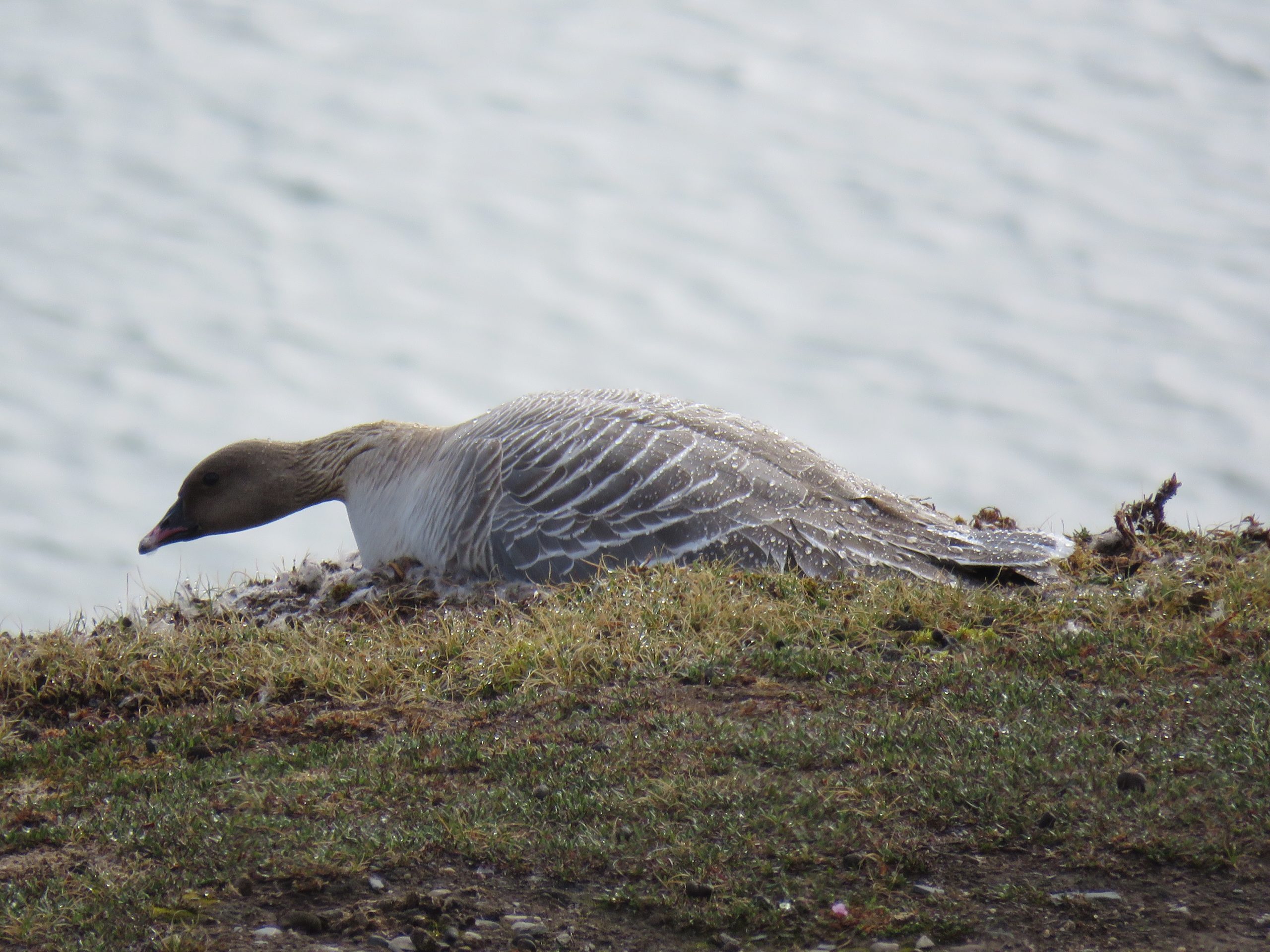
Pink-footed Goose nesting in Svalbard © Elaine Hoyle
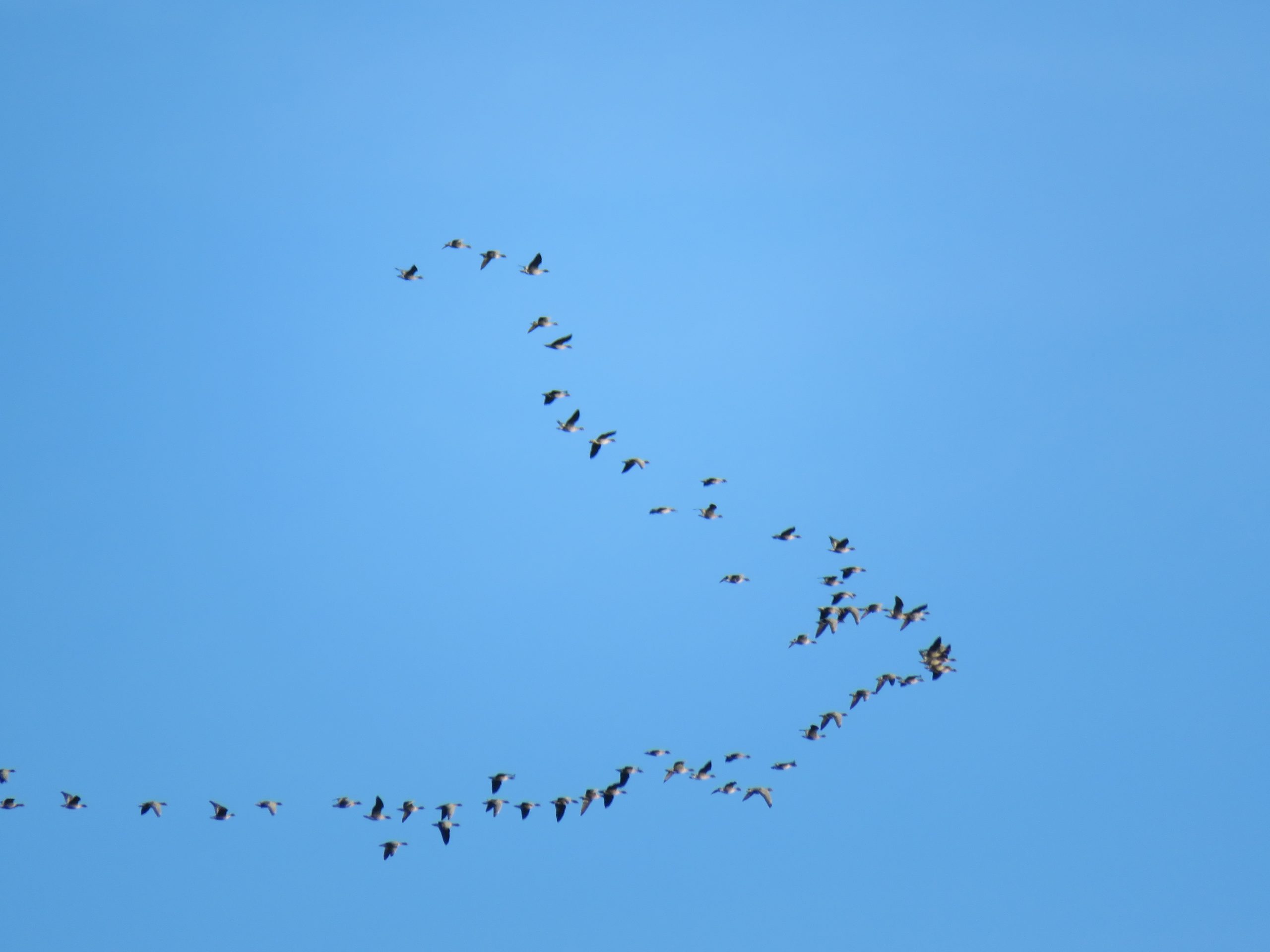
Pink-footed Geese in flight © Elaine Hoyle
Triggers for migration include the length of day and variations in temperature. The birds will undertake a period of fattening to provide sufficient body reserves to undertake a flight sometimes taking days to complete. One of the ways they achieve this is by lowering their core body temperature. This saves energy and helps with fat deposition. Birds will always optimise their routes in order to minimise energy expenditure so a change in wind direction, such as we had last week, will frequently bring more skeins.
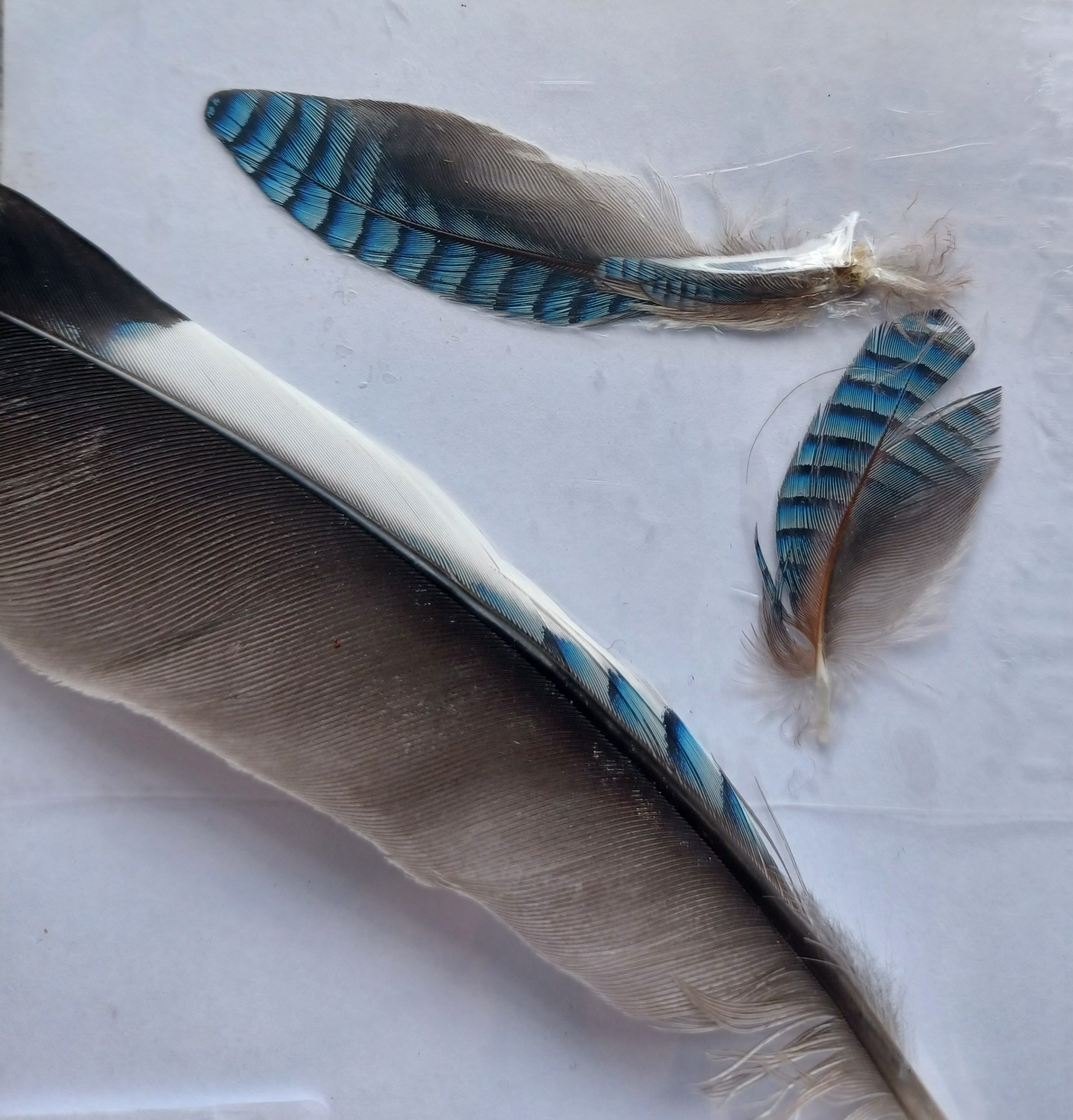
Jay feather © Elaine Hoyle
The Jay’s flight can look a little uneven, although it usually follows a fairly straight course. In flight, look out for the distinctive white patch at the base of the tail. Jays can also be very noisy, and their harsh calls are often the first clue that one is nearby.
They are not common garden visitors, preferring more wooded areas. Last year, I recorded 36 Jay sightings here compared with 96 Jackdaws, but over the past week I have seen several. This fits with increased sightings across the country reported through BTO BirdTrack. Autumn is a particularly good time to look out for these colourful and charismatic birds.
The British Trust for Ornithology (BTO) has run the year-round Garden Birdwatch scheme since 1995. The aim is to better understand the importance of gardens as habitat and how birds and other wildlife interact with them. If you’d like to take part in the BTO Garden Birdwatch, check out our blog, https://goathlandnature.com/bto-garden-birdwatch/ or scan the QR code to get registered:
